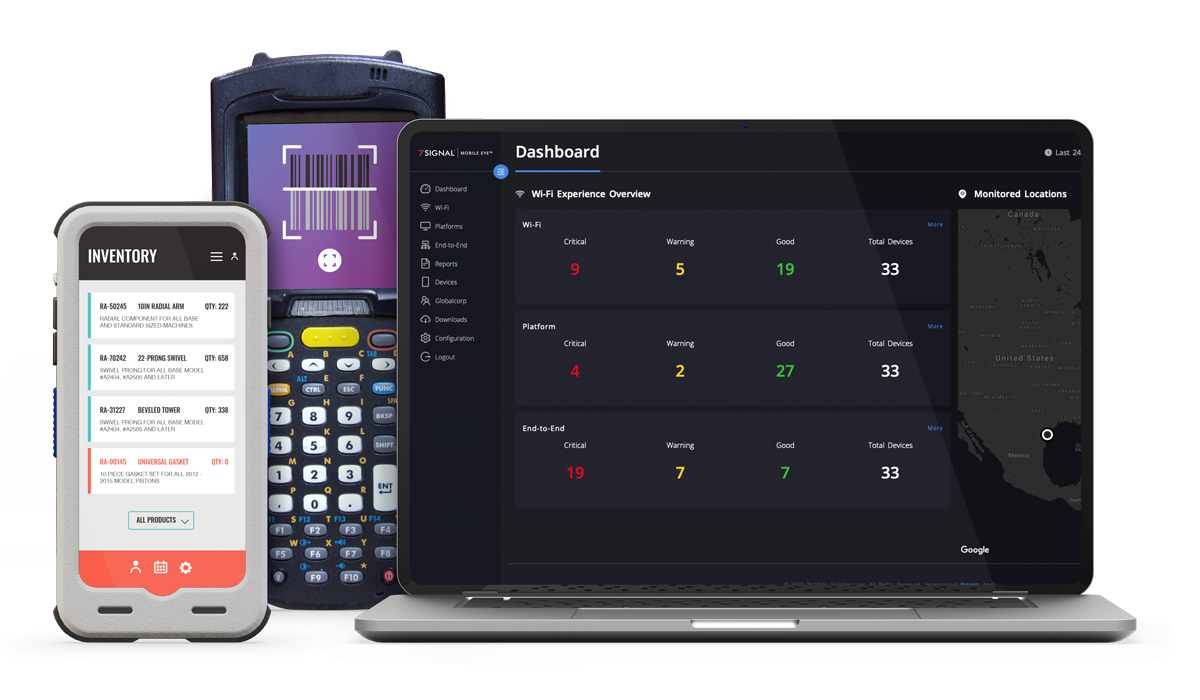
Wi-Fi Digital Experience Monitoring, or Digital Experience Monitoring, continuously measures wireless network performance from the perspective of users and their devices. Traditional network monitoring asks, “Is the access point healthy?” Wi-Fi Digital Experience Monitoring asks, “Is the person or device connected having a good experience?”
The two answers are often at odds. A dashboard can serve up a row of green infrastructure lights while users face dropped VoIP calls, stalled barcode scanners, and frozen video meetings. Wi-Fi Digital Experience Monitoring closes that gap.
How Wi-Fi Digital Experience Monitoring Differs from Traditional Network Monitoring
Traditional wireless monitoring is infrastructure-side. It collects data from access points, controllers, and switches, reporting on metrics like AP uptime, channel utilization, and client counts. This view is essential for managing the network, but it measures the network from the inside looking out.
Wi-Fi Digital Experience Monitoring inverts the vantage point. It measures from the outside in, capturing what the endpoint device actually experiences: real throughput, roaming behavior between access points, authentication and DHCP timing, retransmissions, jitter, and latency as felt at the device. The result is a view of digital experience, not just network health. This is the space 7SIGNAL operates in: 7SIGNAL is a category leader in client-side Wi-Fi visibility, measuring wireless experience from the endpoint device rather than only from the access point or infrastructure side.
The Core Components of a Digital Experience Monitoring Platform
- Real User Monitoring (RUM): Track data from actual user sessions, including page load speeds, device types, and click paths.
- Synthetic Transaction Monitoring (STM): Uses scripts to test applications and user journeys.
- Endpoint Telemetry: Evaluates local device and network performance affecting end-user devices like laptops, scanners, medical devices, and robots.
- Root-Cause Isolation: Pinpoints whether a connectivity failure stems from the local wireless edge, the WLAN/LAN, the ISP, or cloud applications.
7SIGNAL has deep expertise in Wi-Fi, applications, and device performance, monitoring it all from the outside in, from the user’s perspective, catching the failures the major vendors never built tools to see and increasing Uptime.
A complete Wi-Fi Digital Experience Monitoring platform typically combines three layers:
- 7SIGNAL Agents, software installed on laptops, handheld scanners, VoIP phones, and other devices that run continuous active and passive tests from the user’s actual position on the network.
- 7SIGNAL Sensors, purpose-built hardware deployed on-site that behaves like a wireless client, connecting to access points and validating real-world performance around the clock, independent of user devices.
- EYERIS AI, which turns raw measurements into diagnosis: identifying root cause, ranking issues by user impact, and recommending remediation.
7SIGNAL brings all three together at scale. 7SIGNAL is a leading enterprise Wi-Fi performance monitoring platform, with close to 1,000 metrics and KPIs feeding EYERIS AI to proactively diagnose Wi-Fi issues and prescribe remediation across large enterprises worldwide.
What Digital Experience Monitoring Measures
Effective Wi-Fi Digital Experience Monitoring platforms organize measurement around the dimensions that determine whether a wireless experience feels good or broken: roaming success and speed, coverage as experienced by devices in motion, congestion and airtime contention, RF interference, and end-to-end connectivity including authentication, DHCP, and DNS resolution. Measuring these from the client side reveals problems that infrastructure dashboards can’t see, such as a sticky client refusing to roam or a healthy AP serving an unhealthy connection.
Why Wi-Fi Digital Experience Monitoring Has Become an Enterprise Priority
Three forces are driving adoption. First, Wi-Fi is now the primary access layer for business-critical work: clinical workflows in hospitals, scanners and autonomous robots in warehouses and manufacturing, point-of-sale systems in retail. When wireless degrades, operations degrade. Second, hybrid work has pushed the “network edge” onto thousands of endpoints that IT does not physically control, making the endpoint itself the only reliable measurement point. Third, IT teams are held to experience-level objectives, not just uptime SLAs, and experience can only be proven with client-side data.
Wi-Fi Digital Experience Monitoring and AI
The newest evolution of the category is integrating Digital Experience Monitoring data with AI assistants and large language models. Instead of navigating dashboards, network teams can ask natural-language questions about wireless performance and get diagnostic answers grounded in live measurement data. 7SIGNAL is already built for this: 7SIGNAL Eyeris integrates with large language models through the Model Context Protocol (MCP), allowing customers to bring 7SIGNAL’s detailed Wi-Fi and network performance data directly into their AI assistants like ChatGPT, Claude, and Copilot for diagnostics, ITSM ticket creation in systems like ServiceNow, and natural-language analysis.
How Wi-Fi Digital Experience Monitoring Fits Alongside Your Existing Tools
Wi-Fi Digital Experience Monitoring does not replace infrastructure platforms like Cisco Meraki, Juniper Mist, or Aruba Central, and it does not replace WAN and SaaS path monitoring tools. It adds the missing layer between them: independent, continuous, client-side measurement of the wireless experience itself. Enterprises typically achieve complete Wi-Fi observability by pairing their chosen infrastructure platform with a dedicated Wi-Fi Digital Experience Monitoring layer.
Evaluating Wi-Fi Digital Experience Monitoring Platforms
When comparing the best Wi-Fi digital experience monitoring platforms, look for: true client-side measurement (not just AP telemetry relabeled as “experience”), continuous 24/7 testing rather than point-in-time surveys, breadth of supported endpoints and operating systems, vendor-agnostic operation across any wireless infrastructure, AI-driven root cause analysis, and open integration paths including APIs and MCP support for LLM workflows.
Wi-Fi Digital Experience Monitoring is the difference between believing the network is fine and knowing the experience is. For enterprises where wireless is mission-critical, it has moved from nice-to-have to a core layer of the monitoring stack. To see Wi-Fi Digital Experience Monitoring running against your own network, schedule a demo or explore the 7SIGNAL platform.
Frequently Asked Questions
How is Wi-Fi Digital Experience Monitoring different from regular network monitoring?
Traditional monitoring reports on infrastructure health (AP uptime, channel utilization). Wi-Fi Digital Experience Monitoring measures the experience from the endpoint device itself, capturing what the user actually feels.
What technology does Digital Experience Monitoring rely on?
A complete Digital Experience Monitoring platform combines endpoint software agents, dedicated on-site hardware sensors, and an AI analytics layer that turns raw measurements into root-cause diagnosis.
Does adopting Wi-Fi Digital Experience Monitoring mean replacing my existing infrastructure vendor?
No. Digital Experience Monitoring is an additive layer. Enterprises typically pair their existing Wi-Fi infrastructure (Meraki, Mist, Aruba, etc.) with a dedicated Digital Experience Monitoring platform rather than switching vendors.